
Dialing With New Mexico Phone Codes
Local calls take 10 digits statewide. That has been the rule since October 24, 2021, and it holds no matter which of the two New Mexico area codes you are calling from or calling to. Punch in seven digits and the call fails. Every other kind of call adds a phone code in front of those 10 digits or replaces them entirely with a short service code. These are the ones a New Mexico caller actually uses, with real state numbers as examples.
| Call Type | Phone Code Format | Example |
|---|---|---|
| Local call inside New Mexico | 10 digits, area code plus 7 | 505-476-7759 (State Personnel Office) |
| Long distance inside the US | 1 plus 10 digits | 1-575-646-0111 (NMSU operator) |
| Toll free | 1 plus toll free code plus 7 | 1-800-321-2537 (New Mexico 811) |
| International from New Mexico | 011 plus country code plus number | 011 then the country code |
| Service code | 3 digit N11 code | 811 before digging |
The leading 1 causes some confusion. NANPA classifies both New Mexico area codes as 10 digit dialing areas rather than 1 plus 10 areas, so a straight 10 digit string is the standard. Some carriers and older office systems still want the 1 on a toll call, and mobile phones will generally take either. On a cell phone, +1 followed by the 10 digits works from anywhere.
N11 Phone Codes in New Mexico
N11 codes are the three digit phone codes that reach a service rather than a household. Nine of them are reserved nationally, but what sits on the other end changes from state to state, and a few of them behave differently depending on where in New Mexico you dial from. The routing below reflects the organizations that actually answer in this state.
| N11 Phone Code | What It Reaches in New Mexico |
|---|---|
| 211 | Community and social service referrals through United Way. United Way of North Central New Mexico lists 211 or 505-245-1735. |
| 311 | Not a statewide code. It works only where a city runs it. Albuquerque takes 311 or 505-768-2000 for non-emergency city services. |
| 411 | Directory assistance from your own carrier. Usually billed per call, and it is not a public records directory. |
| 511 | Traffic and travel information. Availability varies by carrier and region in New Mexico, so confirm it works on your line before you need it. |
| 611 | Repair and customer service for whichever company provides your phone service. |
| 711 | Telecommunications Relay Service, used statewide for TTY and relay calls by people who are deaf, hard of hearing, or have a speech disability. |
| 811 | New Mexico 811, the call before you dig line. Dial 811 or 1-800-321-2537 at least two business days before any excavation. |
| 911 | Police, fire, and ambulance for an emergency happening now. Not for directory questions, records, or billing. |
| 988 | New Mexico 988 for mental health, emotional, alcohol, and substance use support. The New Mexico Crisis and Access Line also answers at 1-855-662-7474. |
The national 211 network keeps a public front door for the service, and it explains what the code does and who answers it at 211.org.
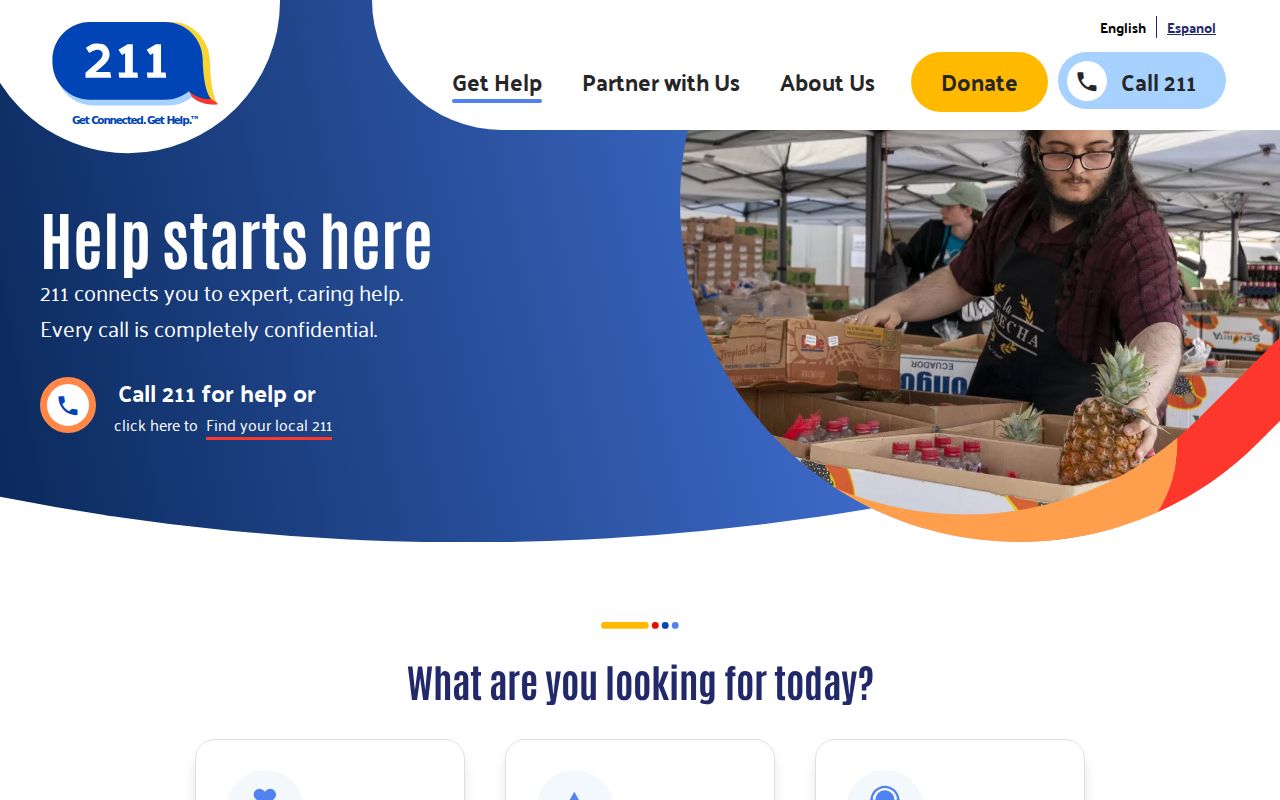
The national page is the general explanation. The answer a New Mexico caller gets is local, because 211 hands off to the affiliate that covers the caller's counties. That is the part worth knowing before you dial, since the resource lists behind 211 are built county by county rather than statewide.
United Way of North Central New Mexico runs the helpline for its service area and publishes the numbers behind it at uwncnm.org, including 211 itself, the direct line at 505-245-1735, the state health helpline at 1-833-796-8773, and benefits and disaster contacts.
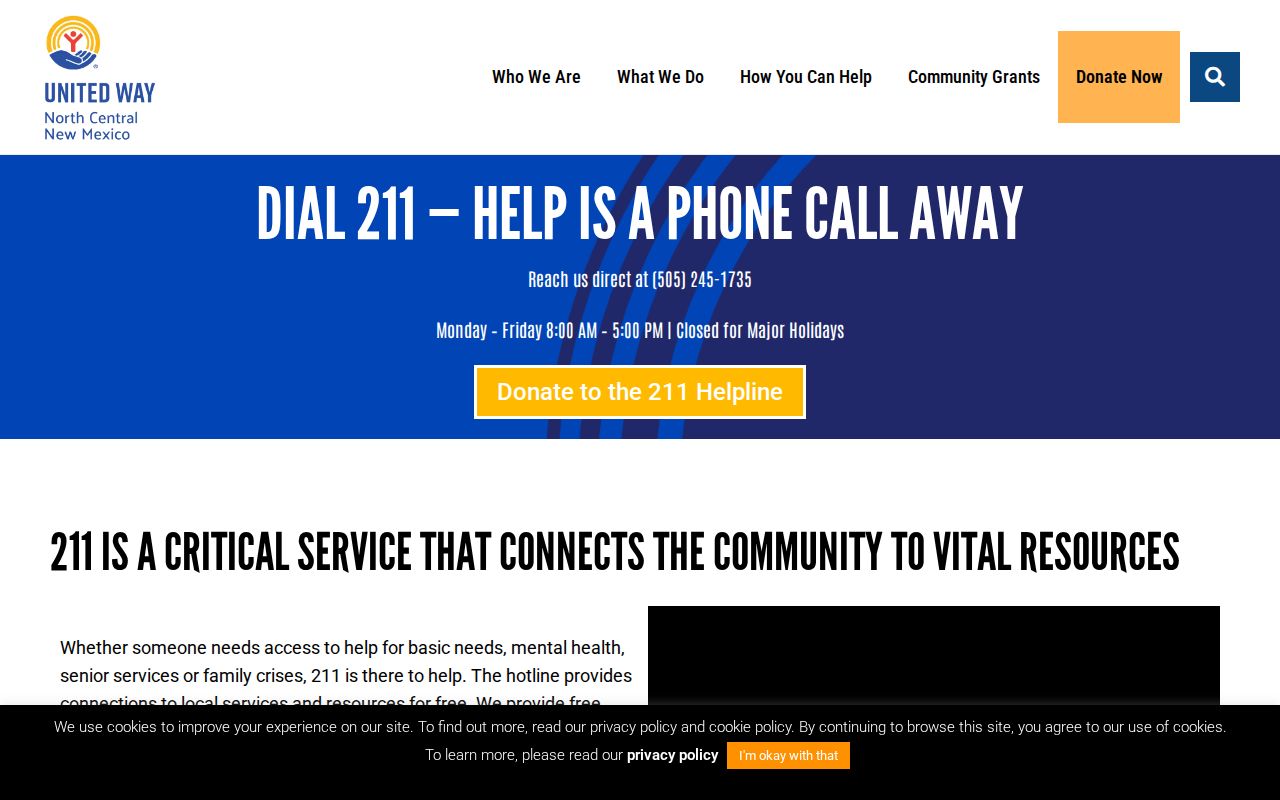
Hours and coverage areas for the helpline change over time, so check the affiliate page before counting on a specific window. Callers outside that service area still dial 211 and get routed by their own carrier.
Note: Keep 911, 988, 211, and 311 straight in your head, since three of the four are not emergency lines and sending the wrong call to 911 slows someone else down.
Star Phone Codes on New Mexico Lines
Star codes are the shortest phone codes of all. Two digits after an asterisk, dialed before or instead of a number, and they switch a feature on your own line rather than placing an ordinary call. Support depends entirely on the carrier. Traditional landlines handle nearly all of them, cable and internet voice services handle most, and wireless plans handle only some. Nothing here is specific to one company, so try the code on your own line before you rely on it.
| Star Phone Code | Action |
|---|---|
| *57 | Traces the call that just came in and files the origin with your carrier for law enforcement |
| *60 | Rejects specific numbers you add to a block list |
| *67 | Hides your number on the one call you are about to place |
| *69 | Calls back whoever rang you last, though blocked and spoofed numbers usually fail |
| *70 | Turns off call waiting for one call, so nothing interrupts |
| *72 | Starts call forwarding. You dial the destination number right after |
| *73 | Shuts call forwarding back off |
| *77 | Refuses calls that arrive with the number hidden |
| *82 | Shows your number on one call when your line normally hides it |
One of these codes is a favorite with scammers. Call forwarding activation sends every incoming call somewhere else, so a caller who talks you into dialing *72 and a number they supply can quietly take over calls meant for you, including verification calls. No real bank, utility, or agency will ever ask you to enter a star code during a call. If someone does, hang up, then dial *73 to cancel forwarding and check your line by calling it from another phone.
Two of the codes are worth knowing before you need them. Call trace records the origin of a harassing call for law enforcement, and it usually has to be dialed right after the call ends. Caller ID blocking with *67 is per call, so it resets on the next one.
Area Codes as New Mexico Phone Codes
Area codes are phone codes too. They are the three digit numbering plan area at the front of every number, and New Mexico has exactly two of them. Because the state uses a geographic split rather than an overlay, each one still points at a region.
- 505 - northwest and central New Mexico, in use since 1947
- 575 - the rest of the state, in use since 2007
- 957 - floated during early relief planning, never activated, and not a New Mexico phone code today
Which towns and ZIP ranges fall under each one, along with the split history and the code that was planned but never used, is laid out in the New Mexico area code coverage reference.
Toll Free and Premium Phone Codes
Toll free phone codes look like area codes but work differently. They do not belong to a place. They shift the cost of the call to the business or agency being called, which is why statewide services use them. Each new toll free code was added as the one before it ran out of numbers, and all of them are still in service. A number that starts with any of them is treated the same way by your carrier.
- 800 - the original toll free code
- 888 - added as 800 filled up
- 877 - next in the sequence
- 866 - widely used by state agencies and call centers
- 855 - common on newer crisis and helpline numbers
- 844 - added as demand kept growing
- 833 - the most recent toll free code
New Mexico has a couple of memorable ones. New Mexico Gas Company answers gas leaks and emergencies at 1-888-NM-GAS-CO, which dials as 1-888-664-2726. The New Mexico Crisis and Access Line uses 1-855-NMCRISIS, or 1-855-662-7474. Vanity numbers like these are easier to remember in a bad moment, which is exactly the point.
Two codes go the other way. A 900 number is premium rate, meaning the caller pays a charge set by the company on the other end, and 976 was used the same way on local networks in earlier decades. Neither belongs in the toll free family. Treat an unfamiliar 900 number as a cost, not a callback.
Note: A callback number in a suspicious text or voicemail is worth checking against the official phone code and number published by the agency itself.
Calling Out of New Mexico
Country code 1 covers the United States, Canada, and more than 20 other territories in the North American Numbering Plan, and New Mexico sits inside it. You almost never dial it at home. It matters in two situations: when someone abroad calls a New Mexico number, and when you write a number for an international audience. Written in full, a state number looks like +1 505 476 7759. Calling out of the country is where the extra phone code shows up.
- From a New Mexico landline calling abroad: dial 011, then the destination country code, then the local number.
- From a mobile phone in New Mexico: dial + (press and hold 0), then the country code, then the local number.
- From abroad calling New Mexico: dial that country's exit code, then 1, then the 10 digit number.
The + symbol on a mobile keypad replaces 011 and works from any country, which saves looking up exit codes while traveling.
NXX Phone Codes in a New Mexico Number
Read a New Mexico number left to right and you pass through three phone codes before you reach the line itself. Take 575-646-0111. The 575 is the area code. The 646 is the NXX, also called the central office code or prefix. The last four digits are the line number, and only those four are unique to the phone. That middle block is the part most people ignore and the part that carries the most information about where a number came from.
NXX codes were assigned in blocks tied to a rate center, the small local calling area that a batch of numbers belongs to. That is why certain prefixes repeat across an organization. State offices in Santa Fe answer on 505-827 and 505-476, the University of New Mexico on 505-277 with its health side on 505-272, and New Mexico State University on 575-646. Seeing a familiar prefix on caller ID is a weak signal, but it is a signal.
Portability is what weakens it. Since customers can carry a number between landline, wireless, cable, and internet voice providers, a prefix may reflect the original assignment rather than the current carrier or the current city. A free prefix lookup is a starting point. For who actually serves a number today, a live carrier lookup is the better tool, and neither one tells you who is holding the phone.
Spam Labels and Spoofed New Mexico Codes
STIR/SHAKEN is the caller ID authentication framework the FCC requires of phone providers. In plain terms, the network that originates a call attaches a signed attestation about the caller ID it is sending, and the network that delivers the call can check that signature. It confirms that a provider vouched for the number. It does not confirm that the person calling is honest, and it does not identify anyone.
The labels riding on top of it, such as Likely Spam or Spam Risk, come from more than authentication. Carriers and call blocking apps mix in signals like complaint volume, calling patterns, and how many calls a number places in a short window. That is why the labels are useful but imperfect. A legitimate clinic, school, or collections office calling a lot of people in one morning can get flagged, and a real call can land under a warning banner.
The important part for New Mexico residents cuts the other way. A spoofed call can still display a 505 or 575 caller ID, and neighbor spoofing deliberately copies your own area code and prefix so the call looks local. A familiar looking phone code on the screen proves nothing. When a caller claims to be an agency, a utility, or a court, hang up and call the published number instead.
Unwanted calls can be reported to the FTC, and the reporting form for calls to numbers on the registry is at donotcall.gov.
The form asks for the number that received the call, the caller ID that appeared, the date and time, and what the caller wanted. Keeping those four details is enough to file, and the registry itself is aimed at legitimate telemarketers rather than outright scammers.
Phone Code Definitions
The terms behind these codes come up constantly in numbering documents and rarely anywhere else.
- NPA
- Numbering Plan Area, which is the formal name for an area code. New Mexico has two, 505 and 575.
- NXX
- The central office code, meaning the three digits sitting between the area code and the line number.
- N11
- The nine reserved three digit service codes, from 211 through 988, that reach a service instead of a person.
- Vertical service code
- A star followed by two digits. It changes how your own line handles a call rather than placing one.
- Toll free prefix
- A code such as 800 or 833 that puts the cost of the call on the business or agency being called.
- NANP
- The North American Numbering Plan, the country code 1 region that New Mexico shares with Canada and more than 20 territories.
Note: Rate center is the other term worth knowing, since it names the local service area a block of numbers belongs to and explains why prefixes cluster.
How to Check a New Mexico Phone Code
Two federal sources settle most questions about a phone code. NANPA administers numbering for the whole plan and publishes what is assigned, including current area code maps and the status of individual codes. If a three digit code is not there, it is not in service. The FCC covers the consumer side: how area codes get created, what caller ID authentication does, and where to take a complaint about a call.
Complaints about unwanted calls, spoofed caller ID, or a number being wrongly labeled as spam go to the FCC Consumer Complaint Center at consumercomplaints.fcc.gov.
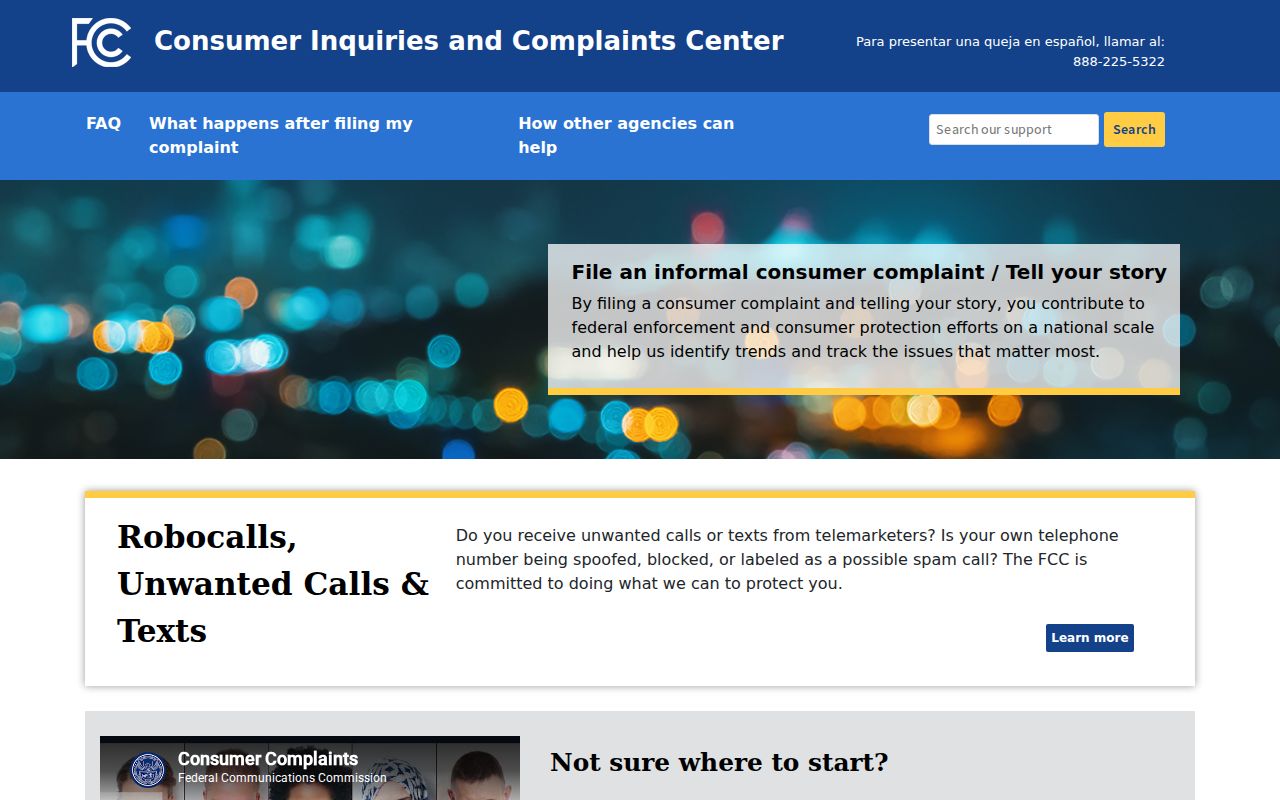
The center branches by issue, so a phone complaint asks which problem applies before it collects the caller number, the date and time, and a description. Attachments such as screenshots or call logs help. For state level utility and telephone service disputes, the New Mexico Public Regulation Commission takes consumer complaints at 1-888-427-5772.